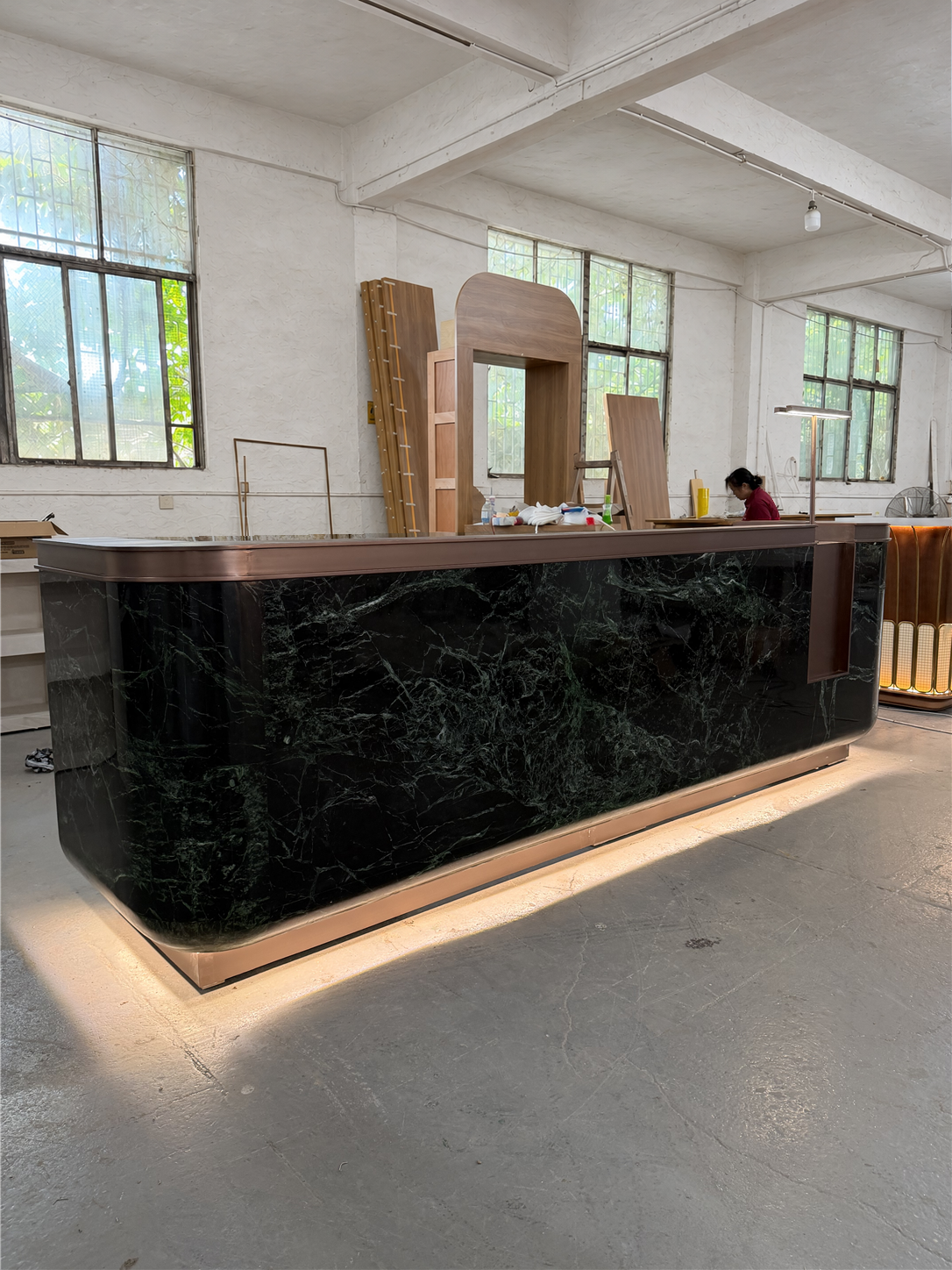
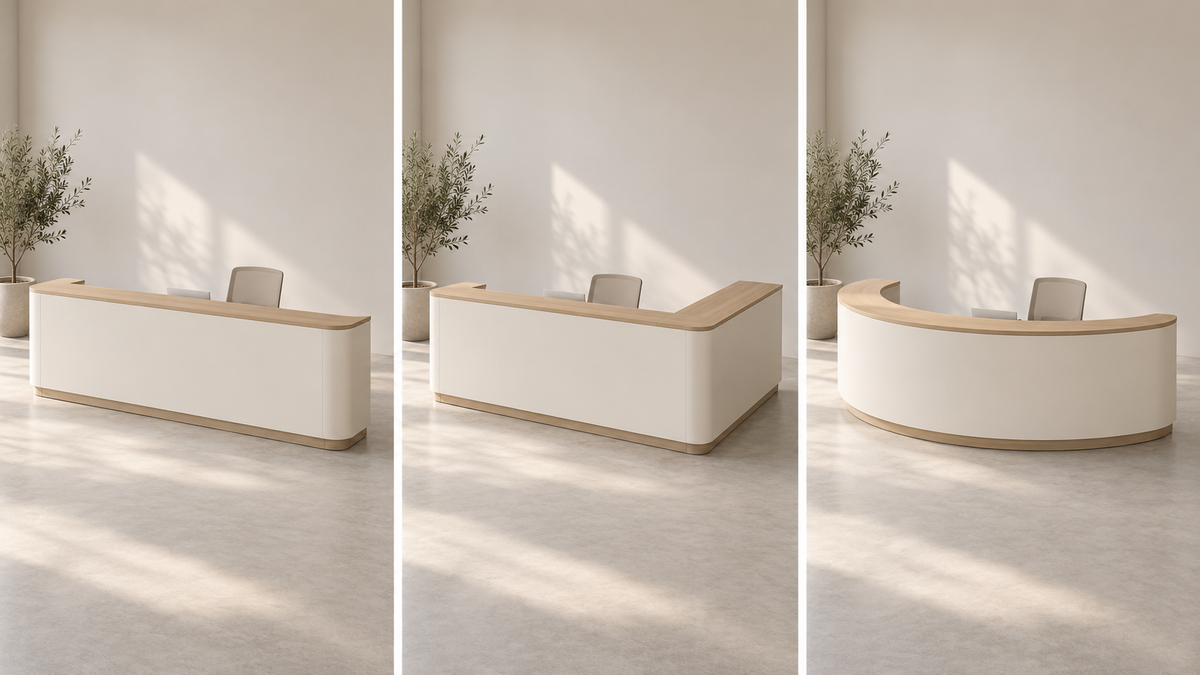
Choosing a reception desk often begins with an image. The veining of the stone, the sheen of the metal or a softly rounded corner makes a design feel right for the space.
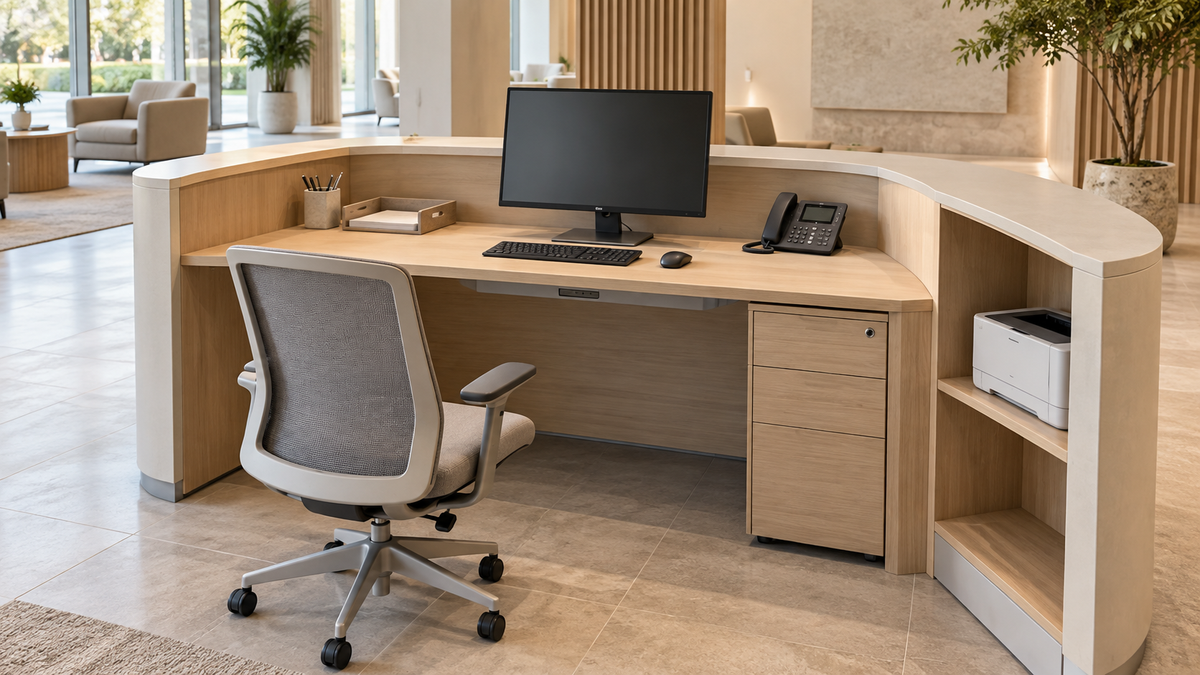
But there are still details to resolve between liking that image and deciding how the desk should be made. Similar colours and shapes can be achieved with different materials and finishes. Two desks that look alike from the front may also need very different working-side layouts.
A useful place to start is a simple question: what do you most want to preserve from the reference?
First, define the effect you want
Sometimes it is the depth of the stone pattern that attracts us. Sometimes it is the colour relationship between stone and metal. Or it may simply be the soft curve that makes the reception area feel more welcoming.
Explaining these preferences helps the manufacturer understand which features need particular attention and which can be adapted to the project.
For example, wanting a grey stone appearance is different from specifying a particular natural marble. The first brief leaves room to discuss material options; the second calls for a closer review of the specified stone, its pattern, dimensions and edge details.
 Natural marble veining: review the actual slab or sample before confirming the material. Photo: Kaboompics / Pexels.
Include a few notes with your reference: what you like, what must remain and what is still open for discussion. This creates a clearer shared understanding than an instruction to simply follow the picture.
Turn the appearance into a material proposal
With the visual direction established, the next step is to confirm how each part will be made.
The decorative front, visitor counter, staff worktop and internal cabinetry serve different purposes. Identify the proposed material for each area rather than using one general name to describe the entire desk.
For metal details, distinguish the colour from the base material and surface treatment. A copper-coloured appearance does not, by itself, establish whether the component is copper or another metal with a finish. Even similar colours can look different when brushed, polished or given a matt finish.
Once these points are clear, the design moves from an interpretation of a photograph to a material proposal that the project team can review.
| Material direction | Describe in the brief | Confirm together |
|---|---|---|
| Natural stone | Named stone or a preferred colour and pattern. | Slab or sample reference, visible edges and planned joins. |
| Stone-look surface | The intended appearance and proposed surface material. | Product reference, pattern and edge treatment. |
| Metal detail | Base metal, colour, texture and sheen. | Finish sample, brushing direction and corner details. |
| Wood or painted surface | Substrate and proposed veneer or coating. | Sample reference, grain direction or sheen, and exposed edges. |
Use samples to confirm the combination
The material names alone do not settle how the combination will look.
Separate photographs of stone, metal and painted samples can be difficult to compare when they were taken under different lighting. Where possible, place the proposed samples together and review them alongside the room's floor, walls or lighting.

The discussion can then move beyond whether an individual colour is correct. Is the metal sheen too prominent? Does the stone pattern give the expected effect? Do the adjoining surfaces work well together?
If a visible corner or material junction is central to the design, discuss whether a detail sample would be useful. A flat sample can help confirm colour and texture, but it cannot fully show the effect of a corner, edge or seam.
Record the accepted sample references and any changes so the next stage has a clear basis.
Carry the selection into everyday use
Finally, return to the way the reception desk will actually be used.
Which surfaces will be touched frequently? Where might drinks be placed? What worktop and storage arrangement will staff need? These questions help frame the discussion about material zones, edge details, cleaning and maintenance.
Before confirming the order, make sure the material schedule, accepted samples and latest drawings correspond. If one material changes, review its junctions with the surrounding components as well.
Following these steps turns the direction in a reference image into a reception desk brief with a clearer appearance, better-defined details and an intended use everyone understands.
Questions before you confirm
Does a marble-look reference confirm natural marble?
No. It communicates an appearance. Ask for the actual proposed surface material and review its sample before confirming the specification.
Do all materials need to be selected before the first enquiry?
No. Identify what is fixed, what you prefer and what is still open. A reference image and those notes give the manufacturer a starting point for discussion.
When discussing a project with SORVENO, you do not need to have every material selected. Start with your reference and the features you want to preserve, then discuss the material combination and the details that need development.