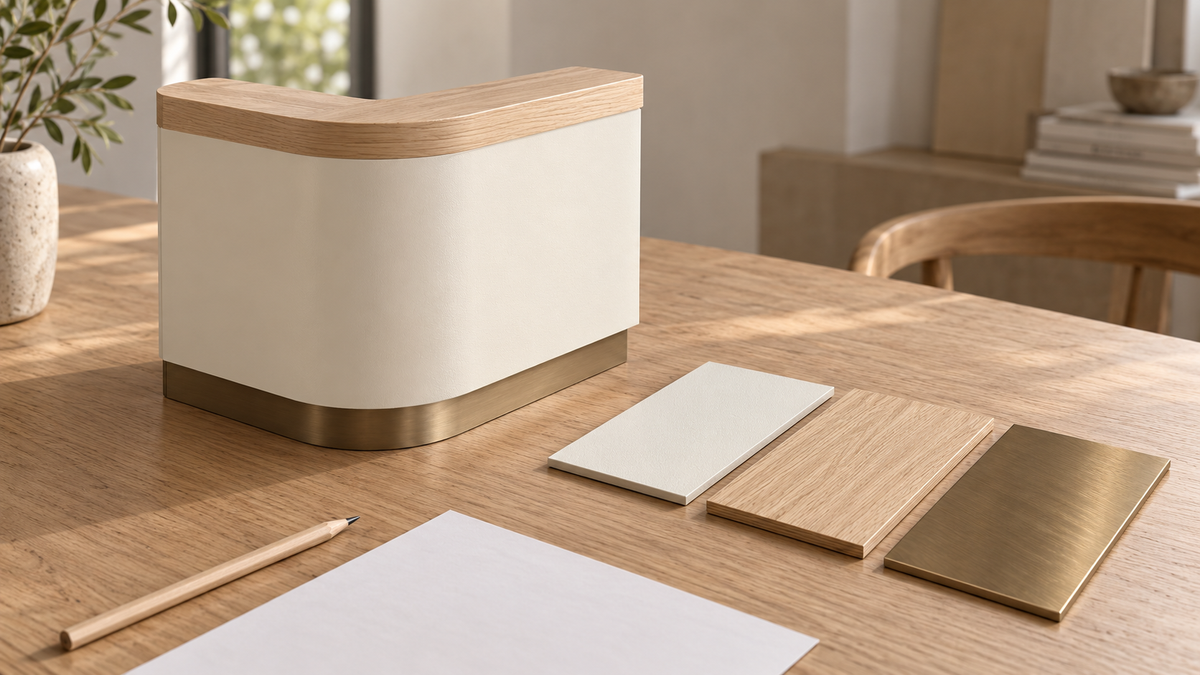
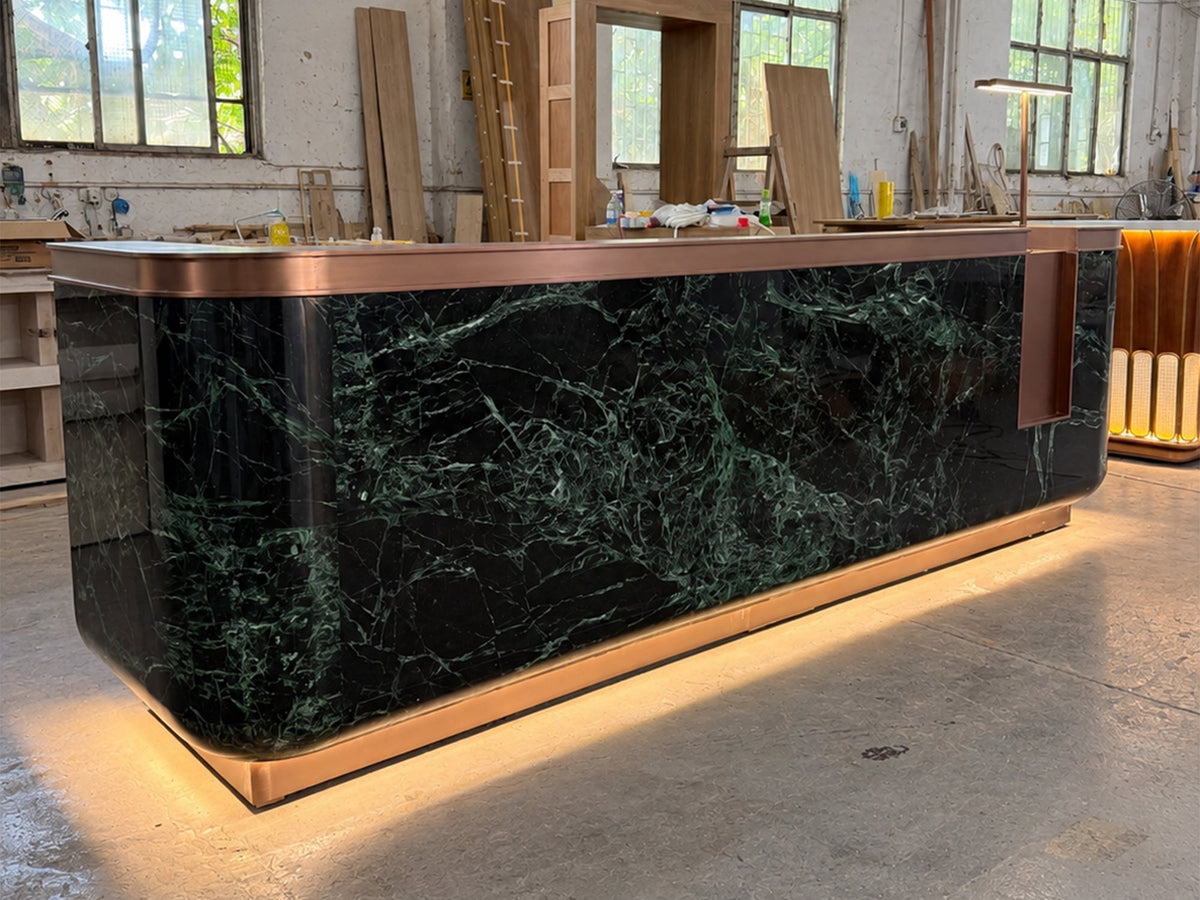
You can begin a custom reception desk enquiry before every detail is decided. A useful first brief includes a design reference, proposed dimensions, quantity, destination and target date, with any open decisions clearly marked.
Those details give the manufacturer a starting point. To develop a quotation you can review, the next step is to explain what the desk needs to include. Work through the brief in the same order you would develop the desk: its appearance and footprint, the staff side, the materials, and finally the supply arrangements.
What should your reference and dimensions explain?
Choose one main reference and describe the features you want to keep. You might like its rounded ends but prefer a different finish, or want the front shape with a simpler internal layout. If you send several images, give each a purpose.
Add the proposed length, depth and height, with units. Distinguish the overall counter height from the staff worktop height when they differ, and label early measurements as preliminary. A floor plan helps show nearby walls, columns and the staff entrance.
Include quantities and variations in the same note. Two desks that look alike may need separate pricing if their sizes or layouts differ.
What needs to fit on the staff side?
The front reference rarely shows everything staff need. List the number of work positions, monitors, printers, phones and storage units. Include equipment dimensions where available, along with drawers, locks and cable openings.

A simple rear-view sketch can make these requirements easier to understand. Show where equipment should sit and which items are supplied by others. For example, requesting space for a printer is different from asking for the printer to be included.
Which materials are fixed, and which can change?
Separate specified materials from visual preferences. “Natural grey marble specified by the project team” gives a different starting point from “a grey stone appearance, with alternatives open for review.”
Share any project material schedule or finish reference, and identify the areas each applies to. If the combination is still developing, our guide to choosing reception desk materials and finishes explains what to confirm.
Use three labels throughout the enquiry: confirmed, preferred and to be discussed. This lets you start the conversation while keeping assumptions visible.
Which dates and supply arrangements matter?
State the destination country and city, then distinguish your purchasing deadline, target arrival date and installation date. These are different milestones; writing “needed in June” leaves room for misunderstanding.
Flag known access constraints, such as narrow doors, lifts or limited unloading space. They may affect how the desk is divided and packed. Ask the supplier to identify the scope of its offer, including drawings, samples, packaging, transport and site work where relevant.
When comparing quotations, check that they cover the same requirements and show any exclusions. An unresolved item should remain a stated assumption or option in the discussion.
What can you copy into your first enquiry?
Use this short brief as a starting point. Leave unknown items marked “to be discussed” and attach the references you already have.
Project: location, intended use and quantity.
Design: main reference and the features to preserve.
Size: length × depth × height, units and measurement status.
Working side: staff positions, equipment, storage and cable access.
Materials: confirmed specifications, preferences and open choices.
Timing and scope: target arrival, installation date, access constraints and requested supply scope.
With these points together, your enquiry gives the manufacturer a clearer basis for identifying missing information and discussing the proposed desk. Share your brief with SORVENO to begin that discussion.